Winners
Recipients
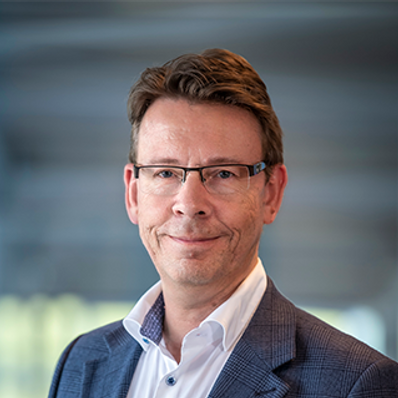
Martin L. Olsson
Former ISBT Past President (2020-2022)
Martin L. Olsson is a full Professor of Transfusion Medicine since 2006 and also the Vice Dean of the Faculty of Medicine (2018- ) at Lund University in Sweden. He received his M.D. (1991) and Ph.D. (1997) in Lund where he also heads up a large research group on red blood cell biology. Since 2001, he is the Medical Director of the Nordic Blood Group Reference Laboratory, part of healthcare in Region Skåne, Sweden. He was a Visiting Scientist at IBGRL/BITS in Bristol, UK (1996) and a Visiting Associate Professor/Lecturer at Harvard Medical School (2003-2008). His main clinical and research interests involve the biochemistry, genetics and function of red cell surface molecules with a special emphasis on their roles in hemolysis, hematopoiesis and hemostasis. Prof. Olsson has received numerous awards from different organisations including ISBT, BBTS and AABB and is currently a Wallenberg Clinical Scholar (2016-2026), appointed by Knut and Alice Wallenberg Foundation after selection by the Royal Swedish Academy of Sciences. He previously served on the ISBT Board as Regional Director for Western Europe (2006-2008) and was ISBT’s first Scientific Secretary (2011-2015).
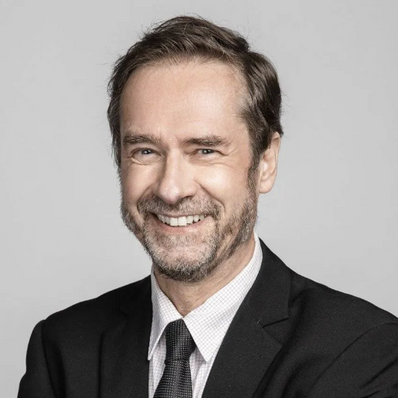
Thierry Burnouf
Thierry, PhD, currently serves as a Distinguished Professor and Vice-Dean at the College of Biomedical Engineering, Taipei Medical University, Taiwan. He established and leads a research lab focusing on platelets and extracellular vesicles in regenerative medicine, cell therapy, and drug delivery. He also holds an Honorary Professorship at the University of Lille, France.
Specializing in plasma fractionation and virus safety, Thierry has published over 300 scientific papers on the development and clinical applications of products derived from plasma and platelets. He is a member of the editorial boards for Vox Sanguinis, Platelets, Biologicals, and Transfusion Clinique et Biologique. In addition, he serves as the Secretary of the ISBT Working Party for Global Blood Safety, Treasurer of the Cellular Therapies Working Party, and advises the WHO on safe blood products, contributing to several guidelines valuable for countries with medium to low resources.
Thierry received the 2019 IPFA Award for his 'exceptional scientific contributions to plasma fractionation technologies, and virus inactivation and removal procedures'. He was also awarded the Outstanding Research Award from Taiwan's Ministry of Science and Technology in 2021, along with multiple teaching and research awards from Taipei Medical University.
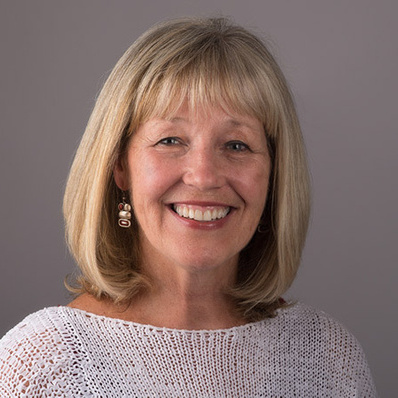
Nancy Heddle
Anneke Brand
Anneke Brand, Professor in Haematology and Transfusion Medicine, passed away Sunday 21 November 2021 at the age of 75. She was a pioneer in both the immunological and the clinical aspects of blood transfusion. Her research led to the universal leukocyte-reduction of all cellular blood components in many countries. She further studied transfusion-related immunomodulation (TRIM), which had a beneficial effect on the outcome of kidney transplantation. In the 1970s she developed a laboratory test to select suitable blood donors for patients with HLA antibodies. She established a registry of blood donors that are homozygous for certain HLA alleles and studied the clinical effect of HLA-matched platelets. In 2000 she was the first to become a professor of Transfusion Medicine in Leiden. As promotor and co-promotor, she supervised over 20 PhD students and co-authored more than 350 papers. She received numerous awards for her contributions to the field, including the ISBT Presidential Award in 2020 and the Landsteiner Award in 2021.
She had a tremendous scientific drive and encyclopedic up-to-date knowledge in many fields of medicine, was well-respected by her colleagues and was adored by her patients.
She will be deeply missed.
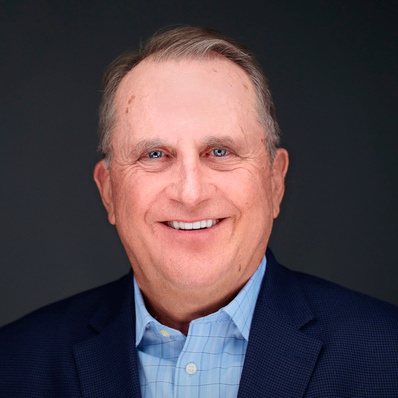
Michael Busch
Past President (2022-2024)
Michael Busch earned his MD and PhD degrees at the University of Southern California followed by residency training in Pathology, Laboratory Medicine and Transfusion Medicine at the University of California, San Francisco (UCSF). He is currently Director of Vitalant Research Institute (VRI) and Senior Vice President for Research and Scientific Affairs at Vitalant, a national network of blood centers and donor testing laboratories. He is also a Professor of Laboratory Medicine at UCSF. Michael is one of the world’s leading transfusion medicine scientists, well-regarded for his ground-breaking work in such transfusion-transmitted diseases as HIV, HBV, HCV, HTLV and West Nile virus and protection of the nation’s blood supply from these and other emerging pathogens including ZIKV and SARS-CoV-2. He has published over 550 peer-reviewed scientific articles, editorials and book chapters. Michael is a member of the Transfusion Transmitted Diseases Committee of AABB, the Research and Development Advisory Committee of Canadian Blood Services and several World Health Organization panels.
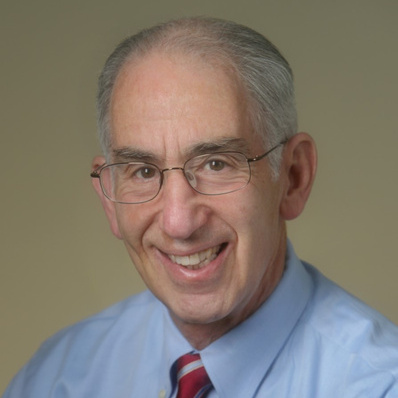
Harvey G. Klein
Dr. Klein is Scientist Emeritus at the U.S. National Institutes of Health. For more than 40 years he served as Chief, Department of Transfusion Medicine at the Clinical Center of the National Institutes of Health. Following graduation from Harvard College, Dr. Klein received his doctor of medicine from the Johns Hopkins School of Medicine and completed both his residency and hematology fellowship at Johns Hopkins where he remains Adjunct Professor of Medicine and Pathology.
Dr. Klein has authored or co-authored more than 300 publications pertaining to blood transfusion. He co-authored two editions of Mollison’s Blood Transfusion in Clinical Medicine, often referred to as the “gold standard” textbook in this discipline and has served as editor-in-chief of the Journal of Clinical Apheresis, Associate Editor of Biologicals, and on the editorial board of Blood. He is currently an editor of Transfusion and The Journal of Translational Medicine.
Dr. Klein has been Chair of the US Pharmacopoeia Blood and Blood products Committee, and currently chairs the American National Red Cross Medical Advisory Council. He is a former Council President of the National Marrow Donor Program and Past President of the American Association of Blood Banks. He is a charter member of the US Secretary’s Advisory Committee on Blood Safety and Availability. Dr. Klein has received numerous honors, including the NIH Director’s Award, the Presidential Award of the International Society of Blood Transfusion for lifetime contributions to Transfusion Medicine, and the Fantus Medal, the foremost recognition of
the AABB. The Public Health Service has awarded Dr. Klein the Commendation Medal, the Meritorious Service Medal, and the Secretary’s Distinguished Service Award, the highest civilian award given by the U.S. Department of Health and Human Services.
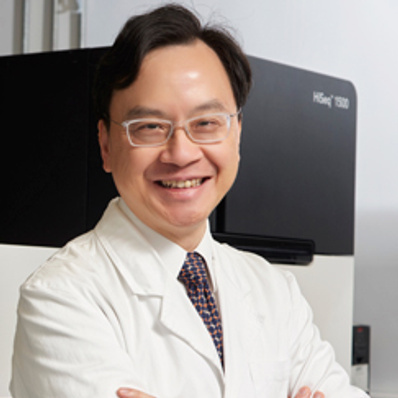
Dennis Lo
Dennis Lo is the Director of the Li Ka Shing Institute of Health Sciences, the Li Ka Shing Professor of Medicine and Professor of Chemical Pathology of The Chinese University of Hong Kong (CUHK). He is also the Associate Dean (Research) of the Faculty of Medicine of CUHK. Dennis Lo received his Bachelor of Arts degree from the University of Cambridge and the Doctor of Medicine and Doctor of Philosophy degrees from the University of Oxford.
Following his training at Oxford, he was appointed as the University Lecturer in Clinical Biochemistry and Honorary Consultant Chemical Pathologist at the John Radcliffe Hospital, the teaching hospital of the University of Oxford Clinical School. He was also a Fellow at Green College, Oxford.
Dennis Lo returned to Hong Kong in 1997. In the same year, he discovered the presence of fetal DNA in maternal plasma. His group has since remained at the forefront of this field. His group was the first to report the presence of cell-free fetal RNA and fetal epigenetic markers in maternal plasma and pioneered the use of such markers for noninvasive prenatal diagnosis. Dennis Lo and his colleagues were also the first to show that cell-free fetal nucleic acids in maternal plasma could be used for the noninvasive prenatal diagnosis of fetal trisomy 21 and had devised multiple solutions for this hitherto difficult diagnostic problem, including methods based on plasma RNA-SNP allelic ratios, plasma epigenetic markers, digital PCR and massively parallel DNA sequencing. With the use of massively parallel sequencing and the development of novel bioinformatics strategies, Dennis Lo's group succeeded at deciphering a genome-wide genetic map of the fetus through the analysis of the small amounts of fragmented DNA floating in the blood of pregnant women. This scientific achievement lays the foundation for developing non-invasive prenatal diagnostic tests for multiple genetic diseases in a non-invasive way.
In the area of cancer detection, Dennis Lo has pioneered a number of approaches to cancer liquid biopsy, especially for the detection of nasopharyngeal carcinoma and genomewide approaches for screening multiple types of cancer.
In recognition of his work, Dennis Lo has been the recipient of numerous awards, including the King Faisal International Prize in Medicine in 2014, the Future Science Prize - Life Science Prize in 2016 and the 2021 Breakthrough Prize in Life Sciences. He was elected as a Fellow of the Royal Society in 2011, as a Foreign Associate of the US National Academy of Sciences in 2013 and as a Founding Member of the Academy of Sciences of Hong Kong in 2015.
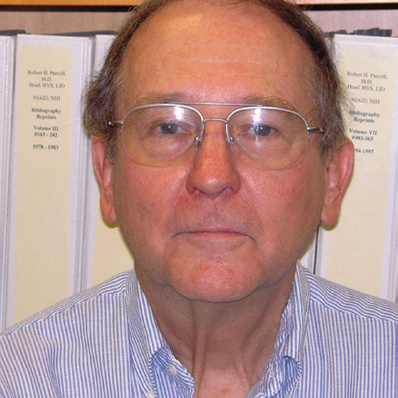
Robert Harry Purcell
Robert Purcell joined the U.S. Epidemic Intelligence Service in 1963, where he investigated respiratory viruses and mycoplasma. He then moved to the National Institute of Allergy and Infectious Diseases, where he rose to chief of the hepatitis viruses section of the Laboratory of Infectious Disease, and co-chief of the Laboratory of Infectious Disease with Brian R. Murphy. He retired from the National Institute of Allergy and Infectious Diseases in 2013.
Purcell was elected to the U.S. National Academy of Sciences in 1988. In 1998, he was granted the King Faisal Prize along with John L. Gerin for "Control of Communicable Diseases".
Robert Purcell is known for his extensive work on hepatitis viruses. In 1972, he was involved in the group that developed the first animal model for hepatitis B. In 1973, Purcell, Albert Kapikian, and Stephen Feinstone discovered and characterized hepatitis A virus. In 1978, Purcell showed that hepatitis C virus is transmissible through blood, and that it remains in the body for life. In the early 1980s, Purcell's group discovered a fourth hepatitis virus, hepatitis D virus. In the 1990s, they discovered Hepatitis E virus. Purcell also helped to develop the first licensed vaccine against hepatitis A virus, and was also involved in developing a vaccine against hepatitis B and D viruses, and a vaccine candidate for protection from hepatitis E virus.
The same team who co-identified the Hepatitis A virus (HAV) developed the first assays that could measure the virus antigen and antibody, and using those assays, the group along with Harvey J. Alter demonstrated through the serologic exclusion of Hepatitis A and Hepatitis B that a third, previously unrecognised form of viral hepatitis existed, originally named non-A, non-B hepatitis (NANBH). Michael Houghton's laboratory at Chiron Corporation ultimately identified the agent associated with NANBH, now known as Hepatitis C, in 1989.
Paul (Cornelius Paulus) Engelfriet
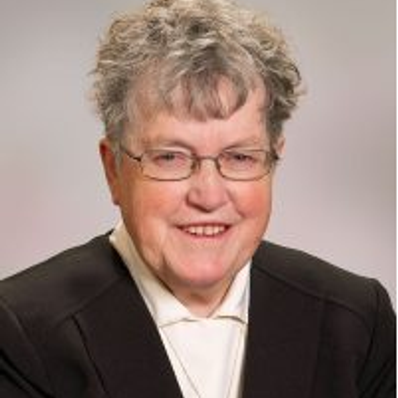
Sherrill J. Slichter
Claes F. Högman
David Anstee
Jean-Pierre Cartron
Harvey J. Alter
Dr. Alter earned his medical degree at the University of Rochester Medical School, and trained in internal medicine at Strong Memorial Hospital and at the University Hospitals of Seattle. In 1961, he came to the National Institutes of Health as a clinical associate. He then spent several years with Georgetown University, returning to NIH in 1969 to join the Clinical Center's Department of Transfusion Medicine as a senior investigator, becoming Chief of the Clinical Studies and Associate Director of Research in the Department of Transfusion Medicine at the NIH Clinical Center. In 2000, Alter was awarded the prestigious Clinical Lasker Award. In 2002, he became the first Clinical Center scientist elected to the National Academy of Sciences (NAS), and in that same year he was elected to the Institute of Medicine. Only a small number of scientists nationally are elected to both of these scientific societies.
Dr. Alter has won the 2020 Nobel Prize in Physiology or Medicine for his contributions to the discovery of the hepatitis C virus. Dr. Alter is a Senior Scholar at the NIH Clinical Center's Department of Transfusion Medicine and shares the award with Michael Houghton, Ph.D., University of Alberta, Canada, and Charles M. Rice, Ph.D., Rockefeller University, New York City.
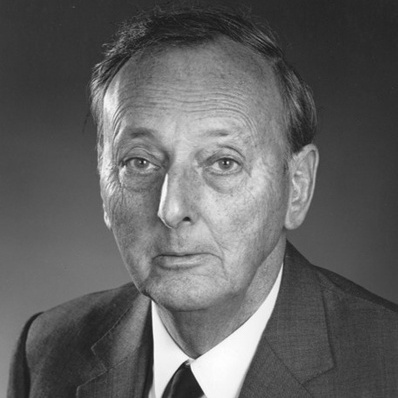
Patrick Loudon Mollison
Full list of previous winners