World Health Organisation (WHO)
Introduction
The World Health Organization (WHO) is a key strategic partner and ISBT is in offical relations with WHO as a Non-State Actor. The relationship between ISBT and World Health Organization (WHO) was first formalised in February,1955 and ISBT continues to be a Non-State Actor (NSA) in official relations WHO. This status is reviewed every 3 years (next review in 2028) and the relationship continues to be of key importance to ISBT, as reflected in the ISBT strategy 2026-2030.
Collaboration is via a mutually agreed triennial work plan designed to enable ISBT to support WHO in implementing WHA resolutions related to the safety and availability of blood and blood components and advocacy for patients and blood donors. ISBT also has a separate MoU with WHO to support the WHO Achilles project to increase availability of Plasma Derived Medicinal Products, acting as host to the International Coalition for Safe Plasma Proteins (ICSPP).
Many ISBT members were involved in the WHO Global Collaboration for Blood Safety active from 2000 – 2008 to improve and harmonise transfusion global transfusion practice. The ISBT Working Parties (WPs), including the ISBT Working Party for Global Blood Safety formed in 2010 continue this work and regularly collaborate with WHO on projects in their areas of expertise. ISBT Working Parties regularly contribute to development of WHO guidelines and toolkits. ISBT continues to work closely with the Health Product Policy and Standards Department at WHO HQ and to support the new WHO action framework 2026-2030 below to enact the WHO resolution WHA63.12.
Key areas of collaboration include policy development, education, training and standardisation
- Ethics & Policy: The ISBT Code of Ethics (CoE) was developed to support WHO resolution WHA 28.72 calling for establishment of national blood services and promoting voluntary, non-remunerated blood donations. The current ISBT CoE is now under review by the ISBT Ethics Committee with a new version expected in 2026.
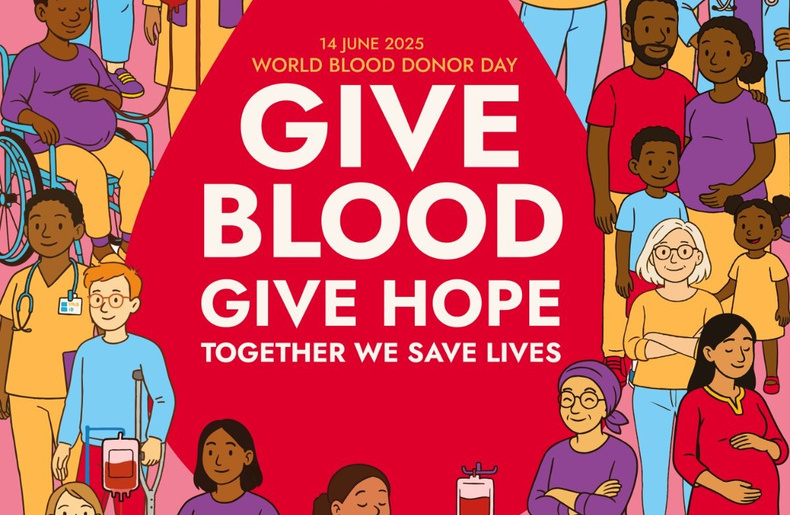
- Advocacy: In 2005, ISBT was a founding partner for WHO World Blood Donor Day (WBDD) and continues to work with WHO to develop WBDD themes, and to encourage and report on WBDD activities around the world.
- Educational and training: ISBT Working Parties partner to create educational material e.g., WHO Educational Modules on Clinical Use of Blood and Haemovigilance Toolkit and to coordinates intercountry training workshops, e.g. on quality management and GMP. WPs regularly contribute to development of WHO guidelines and toolkits.
- Standardisation: In areas such as Haemovigilance and quality management terminology, and coding of blood components. Originating within ISBT and now managed and developed independently by ICCBBA, the ISBT 128 labelling system is actively endorsed by WHO as the global standard for Medical Products of Human Origin (MPHO) traceability.
World Blood Donors Days

WHO guidelines and resources